Paypal

Friday, November 30, 2018

Twas the Night Before Election

Everyone needs to have a little fun now and then.  Here's a bit of political poetry.  I'm hoping to have a book of political poetry out next year but then I hoped that last year too.  

Anyway, enjoy.


The Ballad Of The Vagrant Voter - 2016

T’was the night of election and all through the day,
Voters filled out their ballots; “An obligation,” they say.
The mailings were done, the attack ads were launched,
In hopes partisan voters remained ever staunch;

Party faithful were seated before celebratory spreads, 
While visions of appointments danced in their heads;
When from the television there arose such a chatter,
All sprang to the screen to see what was the matter.

The pundits had spoken, the polls had been taken;
But something was wrong, the press was forsaken.
Despite all predictions the voters expressed ire;
“How could this have happened? Who lit this huge fire?”

On LAUER, on PELLY, on WILLIAMS and KOPPEL;
On KELLY, on BLITZER, this trend we must topple.
It’s time to unite, show the power of TV;
The polls are still open in the far West you see!

And then in a twinkling all noticed the proof;
The maps clearly showing, the people had goofed.
The underdog candidate; he who could not win;
Had dealt the anointed a blow to the chin.

The results were announced with many a tear,
The pundits pronounced, “Now we’ll all live in fear,”
Then strode to the podium, the person of note;
Basked in the results of a big electoral vote.

His eyes - how they twinkled! his dimples how merry!
His cheeks were like roses, his nose like a cherry!
His droll little mouth was drawn up like a bow,
And the color round his eyes was as white as the snow.

“Now you’ll see the economy come back with a roar;
We’ll get people working, that’s a help to the poor.
We’ll roll back the taxes, build infrastructure;
You’ll all find life better, under this, my ducture.”

Pundits still wonder how this all had occurred;
The truth of the matter? The opponent was lured.
Disaster? Apocalypse? Perhaps even worses;
Resulting in hubris and on then, to voter curses!


Saturday, November 3, 2018

Pay It Forward


Indian On The Sound - 1895

The old Indian wrapped himself in the trade blanket; his most prized possession.  Over and over he mumbled his death song; struggling towards the cave he’d found as a young man.  The last of his tribe, the old man had buried his grandson, skin eroded with pustules, just hours ago.

Finally reaching the well-hidden high mountain cave the old man expended the last of his strength  crawling inside.  He discarded the blanket despite the bitter cold, chanting his death song one final time.   

Seventeen decades later the young couple enjoying the last adventure vacation of the summer found the cave.

“Look Ken!  There’s something inside!”

“It looks like an old dead person!  Don’t touch it.  I think it’s been here for a very long time.  We’ll report to the ranger station when we get back down the mountain.”

“Look at this blanket!  It’s so beautiful.  He’s got no use for it anymore.  I want it!”  Donna wrapped the blanket around her shoulders and twirled.  “Let’s take it along.”

“Ok, but only until we rejoin the group.  We’ll give it to the park ranger on the way down.”

The blanket was a sensation.  All the girls in the international tour group wanted a picture. They posed, wearing the ancient artifact; boyfriends draping arms causally around the girl’s shoulders.

At the airport there were goodbye hugs all round then everyone hurried to catch flights to home towns all over the world. 

The Mayo Clinic, 2018; “No cure, or treatment for smallpox exists.”

Saturday, June 2, 2018

To Sooth The Savage Breast


The young man played, unaware of the hundreds of watchers in the nearby wood.  The boy’s fingers flew as he skillfully sent the intricate harmonies of the mouth harp floating off into the ether.  


The boy had worked all summer on the instrument, carefully selecting just the right bone from the dead animal he’d found in the forest, drying the bone under the hot sun, then splitting and carving the dissected result; itself a delicate operation he’d worked at for weeks, to the disdain of the men and other boys of the village. 

In the wood Attila, “the scourge of all lands,” stood, entranced by the intricate melodies coming from the tiny village before him.  Beside him the horses and men of the horde shifted silently, eager for the signal.  The village was too insignificant to put up much of a fight; the battle should be over in minutes, the men dead, the plunder and the women on their way back to the evening camp to be enjoyed; the food consumed, the treasures meted out, the women left for dead in the morning as the horde moved on.

Finally, Attila lifted his hand, signaling a withdrawal, not the sign the men had anticipated.  The horde withdrew, confused but, unquestioning.

Once away, Attila’s officers crowded about, puzzlement in their eyes.  “This village is under my protection,” he said, offering no explanation.

In the village father had had enough.  “Stop that caterwauling,” he demanded, crushing the instrument underfoot.  “I’ve heard Attila’s about!”

Tuesday, December 19, 2017

Free 250 Word Short Story...

Wait! There’s A Hair In My Soup!

Or

Fowl Play

The call logged in at 10 o’clock.  When I showed up the paramedics were just leaving.   “Looks like blunt force trauma,” one of them said, “Someone wacked him good.”

Mary Weber, Fred’s wife, said she’d been making the bed when she heard shouting and then a slamming door.

It was hard to keep my mind on the questions I needed to ask; the delicious smell of soup on the boil wafted through the house.  Mary said she’d chucked a whole frozen chicken into a pot with water and spices then left Fred reading the morning paper while she tended to neatening the bedroom.  “Fred never helped me no matter how poorly I felt,” she sniffed.  “Now I’ll never get to tell him I’m sorry for the terrible things I shouted at him.”

“Blunt force trauma,” the Medical Examiner confirmed.  “Someone nailed him hard up alongside the head.”

“Any sign of a weapon?”

“No, but look for something rounded and hard enough to crush a skull; I’d say maybe about six inches in diameter.”

I hated to leave Mary in the kitchen.  Damn that soup smelled good!

An hour’s search yielded no weapon. 

Mary had made a remarkable recovery, even offered me some soup.  “Best I’ve ever made,” she smiled.  Then came the frown.  “Oh, look, it’s awful!  There’s a hair in my soup!” 


It hit me an hour later.  Mary had long, flowing locks.  The hair she’d spooned from the soup and washed down the sink was short; like Fred’s.

Tuesday, October 31, 2017

Thin Kerf Band Sawmilling - A Carbon Reduction Giant

How much fun is it to get to write a book with your son about a huge environmental enhancement he is deeply involved in; thin kerf band sawmilling.  Here's the proposed cover:


You might not own a thin kerf, band sawmill but, if you're interested in practical environmental enhancements you'll like the following "sample story" written so users of the book (sawmill owners) can, without having to write something for themselves, tell others through the medium of the press, about the benefits they are bringing to community in operating a small sawmill business.

We expect to have the book available within the next 30 days.
 
Thin Kerf Sawmilling – An Environmentally Friendly Harvest

“Kerf” is the thickness of the cut a saw blade makes as it passes through wood fiber when lumber is milled.  The ratio of usable lumber to sawdust generated in sawmill operations has a direct relationship to kerf.  Thinner kerfs yield more lumber and generate less sawdust from a given volume of wood fiber.  Over the past quarter century very thin kerf, band sawmills, like those operated by (your business name here) capable of being operated by one or two people have become increasingly important tools in the worldwide quest to achieve numerous environmental goals commonly held to be of value by both governments and peoples of this earth. 


The environmental advantages of thin kerf sawmilling are substantial and demonstrable.  As just one example, former United States Forest Service researcher, Stephen Bratkovich of the Service’s  Northeastern Area State and Private Forestry division, found, based on a study in Missouri that, “We could save the equivalent of 69 million trees annually,” based on the increase in recovery efficiency thin kerf sawmilling offers.  Those unharvested trees, according to Bratkovich at the time of the study, would continue to absorb about 900,000 tons of carbon dioxide and produce about 650,000 tons of oxygen each year as they continue to grow.  Similar studies at sawmills in other places, including Russia, have produced similar findings.


From an environmental standpoint the source of much of the lumber sawn on thin kerf equipment is more important than the quantity.  Sawmills operated by companies like (your name) are more

often than not milling high quality lumber from logs and other tree parts

conventional sawmills cannot, or will not, accept – lumber that would, absent the services of a thin kerf sawmill, be left in the woods to rot, be turned into firewood, or otherwise under utilized.


Numerous Benefits Create Important Environmental Enhancements

Since even small changes in the atmospheric carbon balance are believed by some to have significant impacts on the earth’s climate, portable sawmills can, and do, play an important role in some of the carbon mitigation strategies many believe to be critical in reducing atmospheric carbon.  Some of the reduction strategies thin kerf mills have proved to be invaluable in pursuing include:


Thin Kerf Sawmilling – An Environmentally Friendly Harvest

“Kerf” is the thickness of the cut a saw blade makes as it passes through wood fiber when lumber is milled.  The ratio of usable lumber to sawdust generated in sawmill operations has a direct relationship to kerf.  Thinner kerfs yield more lumber and generate less sawdust from a given volume of wood fiber.  Over the past quarter century very thin kerf, band sawmills, like those operated by (your business name here) capable of being operated by one or two people have become increasingly important tools in the worldwide quest to achieve numerous environmental goals commonly held to be of value by both governments and peoples of this earth. 


The environmental advantages of thin kerf sawmilling are substantial and demonstrable.  As just one example, former United States Forest Service researcher, Stephen Bratkovich of the Service’s  Northeastern Area State and Private Forestry division, found, based on a study in Missouri that, “We could save the equivalent of 69 million trees annually,” based on the increase in recovery efficiency thin kerf sawmilling offers.  Those unharvested trees, according to Bratkovich at the time of the study, would continue to absorb about 900,000 tons of carbon dioxide and produce about 650,000 tons of oxygen each year as they continue to grow.  Similar studies at sawmills in other places, including Russia, have produced similar findings.


From an environmental standpoint the source of much of the lumber sawn on thin kerf equipment is more important than the quantity.  Sawmills operated by companies like (your name) are more

often than not milling high quality lumber from logs and other tree parts

conventional sawmills cannot, or will not, accept – lumber that would, absent the services of a thin kerf sawmill, be left in the woods to rot, be turned into firewood, or otherwise under utilized.


Numerous Benefits Create Important Environmental Enhancements

Since even small changes in the atmospheric carbon balance are believed by some to have significant impacts on the earth’s climate, portable sawmills can, and do, play an important role in some of the carbon mitigation strategies many believe to be critical in reducing atmospheric carbon.  Some of the reduction strategies thin kerf mills have proved to be invaluable in pursuing include:

Substituting wood products for more energy intensive products and reducing demand for energy in growing timber, harvesting timber, and wood processing;

Reducing carbon emissions in wildfires;

Afforestation of marginal crop land and pasture to forest, reducing conversion of forest land to non-forest use, and increased agroforestry;

Improved forest and habitat management;

Reduced harvest in healthy forests; 

Increasing the proportion and retention of carbon in durable wood products;

Allows landowners of all financial means to affordably manage their land to achieve both environmental enhancements and financial goals.

Affordable thin kerf, portable, sawmills were perfected and brought to market about the same time companies like Microsoft and Apple began their corporate lives.  In the intervening years sawmills like the one (your name) utilizes to mill lumber, millwork, timbers, and other forest products have become widely recognized as being one of the most significant of all locally based tools in achieving greenhouse gas emission reductions as well as national, regional and local goals for waste reduction, reuse, and recycling.


Friday, September 1, 2017

“White Privilege” And “White Supremacy” One Coin - Two Faces

European style Fascism and Nazism endemic, to the second quarter of the 20th Century, are being brought back to vigorous life in modern America.  On the one hand, a loosely organized, but powerful, group of activists speaking to a concept generally termed “White Privilege” are pushing their agenda, with little media attention, to the forefront of discussion about important social and economic issues confronting the new America of the 21st Century.  On the other hand, the resurgence of a cancer that’s attempted to insinuate its way into American society since World War II, generally termed the “White Supremacy” movement, is dominating headlines in 2017 America.  While inaccurate, “White Privilege” is generally seen as a passion of the “left” while “White Supremacy” is generally seen as the passion of the “right.”  In truth, just as Fascism and Nazism were, in many ways, two sides of the same coin and, thus, natural allies, White Privilege activists and White Supremacists are fused into a single coin by the alloy of racism central to the philosophical approach of each group.  


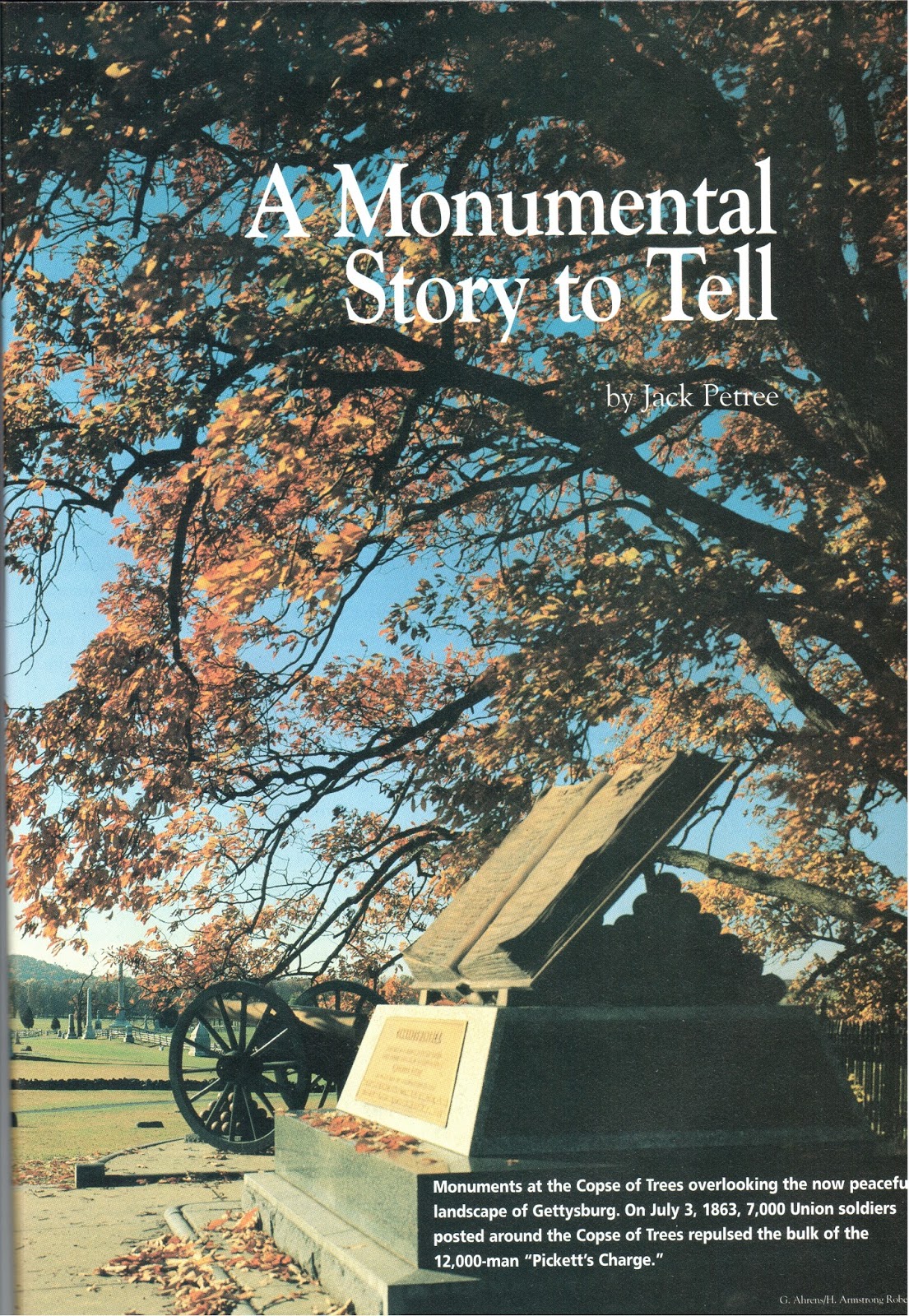
The Bloody Battle Of Gettysburg 
Because there is little ideological difference distinguishable between the race based positions adopted by the White Privilege movement and those of the White Supremacists, Americans truly interested in effectively addressing social and economic challenges facing the nation today are faced with a Hobson’s choice; a take it or leave it proposition with little public discussion about non-racially oriented alternatives to those challenges either wanted, or, often as not, allowed.

White Privilege as a concept is defined well by Wikipedia, “White privilege (or white skin privilege) is a term for societal privileges that benefit people identified as white in Western countries, beyond what is commonly experienced by non-white people under the same social, political, or economic circumstances.” 

Does White Privilege actually exist in America?

Of course White Privilege exists, in the United States and elsewhere.  In any society many groups enjoy “societal privileges” others are not privy to.  A 2016 Pew study of social and economic differences between whites and blacks in the U.S. demonstrated whites do better than blacks in America in many of the social and economic metrics examined.  Data presented in the study also demonstrates those identified as Asians do considerably better in terms of economics than either whites or blacks.  Does that mean “Asian Privilege” should be of more interest to those engaged in the privilege discussion than “White Privilege?”

The potential list of “Privileged” groups is endless.  A 2016 story about Treasury Department data in the Seattle Times was headlined, “Married gay couples beat straight couples in income.”  So now we should worry about “Gay Privilege?”  Pew’s 2016 Religious Landscape Study shows Jews, Hindus, Episcopalians, and Presbyterians all do considerably better in terms of income than either agnostics or atheists, each of whom do better than all of America’s other religious denominations.  Should we now attack “Jew, Hindu, Episcopalian, and Presbyterian Privilege,” and take government mandated steps to improve the lot of Jehovah’s Witnesses; the most deprived religious group economically?

The point is, making the case for “White Privilege” requires defining groups and individuals by race; didn’t we decide years ago the Nazis went outside the bounds of civilized behavior because of their attitudes regarding race?  Don’t most of us agree White Supremacists offer America almost nothing save hate and violence?  So why do “White Privilege” advocates want to follow the lead of those two hate groups?

“White Privilege” advocates most often use the term “people of color,” in defining people by race.  So, who are these people of color?  How does a person come to be defined as an oppressed “person of color” rather than as a privileged “white?”

My mother-in-law and father-in-law both came from Mexico.  Were they people of color?  “White Privilege” advocates, apparently taking onto themselves the moral authority to decide, would generally say, “Yes.”

If my in-laws were people of color then my wife is a person of color.  I am generally considered to be “white.”  Only being half “Mexican,” are our children “white” or are they oppressed “people of color?” 

My children are married to people generally considered to be “white.”  Being only one-quarter “people of color” how will my grandchildren be defined; or my great-grandchildren who may be only one-eighth “people of color?”

Who gets to decide what a person of color is?  Are Jews people of color?  How about Hindus, many of whom claim descent from Aryan forbearers?  How about the descendants of Asian families?  When does a child become “branded” as “white” when born to a family previously defined as a “family of color?”   

Did we learn nothing from the Fascists; from the Nazis; from our own oppression in past times of American citizens identified as being “Japanese?”    

Defining people by race and then applying race based “fixes” to perceived problems based on race is un-Christian and, from the little I know about several other religions, un-Jewish/Hindi/Muslim/etc., not to mention un-American.

A better approach, one that does not defy common decency, is to adopt and then expand on a universal concept found in nearly all religions: “Do unto others as you would have them do unto you.”


“White Privilege” advocates and “White Supremacists” truly represent two faces of the same coin just as the Fascists and the Nazis, both of which espoused versions of Socialism as part of their racist philosophies, were significantly similar.  “White Privilege” advocates and “White Supremacists” want to take the rest of us sliding down the same slippery slope that led to the horrific genocides of the past.  “Never again,” must really mean “Never again” or we will certainly see the horrors of the past repeated again; this time in America.  Is that really a risk we want to take?